Data-backed strategies to build a thriving workplace
A new report from Great Place To Work® and Johns Hopkins analyzes more than 1.3 million employee responses collected from over 2,769 organizations via the Trust Index™ Survey. Researchers compared data from 2019 to 2024 to understand how employee well-being is changing in the post-pandemic era.
This year’s research shows a decline in employee well‑being, echoing broader industry research. In some organizations, lower scores reflect reduced flexibility, such as tighter policies on remote work or flexible hours. In others, declines appear tied to macroeconomic pressures, including inflation and heightened productivity demands.

Get your copy of this exclusive 2025 report
Download the “Employee well-being report: Data-backed strategies to build a thriving workplace” report to explore how companies are boosting retention, productivity, and belonging through a healthy work climate. With insights on leadership’s role and trends across industries, this report offers actionable strategies for any workplace - onsite, hybrid, or remote.
What is employee well-being in the workplace and why is it important?
Employee well-being means looking beyond people's physical health and the type of work they do. Employee well-being is important because when employees consistently have positive experiences across the five areas that contribute to a high level of well-being, they can flourish inside and outside of work.
What you’ll learn
- Well-being is lower for entry-level employees and individual contributors.
- The industry you work in has a significant impact on well-being outcomes.
- Women experience less well-being than men across all ethnic and age groups.
- Flexible work arrangements, such as remote work, are connected with higher levels of overall well-being.
Employee well-being is a predictor of employee retention, referrals, and financial success
Employees who experience high levels of well-being in the workplace are three times more likely to intend to stay with their employer and three times more likely to recommend their employer to others.

Companies that supported five key employee groups (women, frontline workers, hourly workers, people of color, and long tenured workers) during times of crisis posted a remarkable 14.4% market gain.

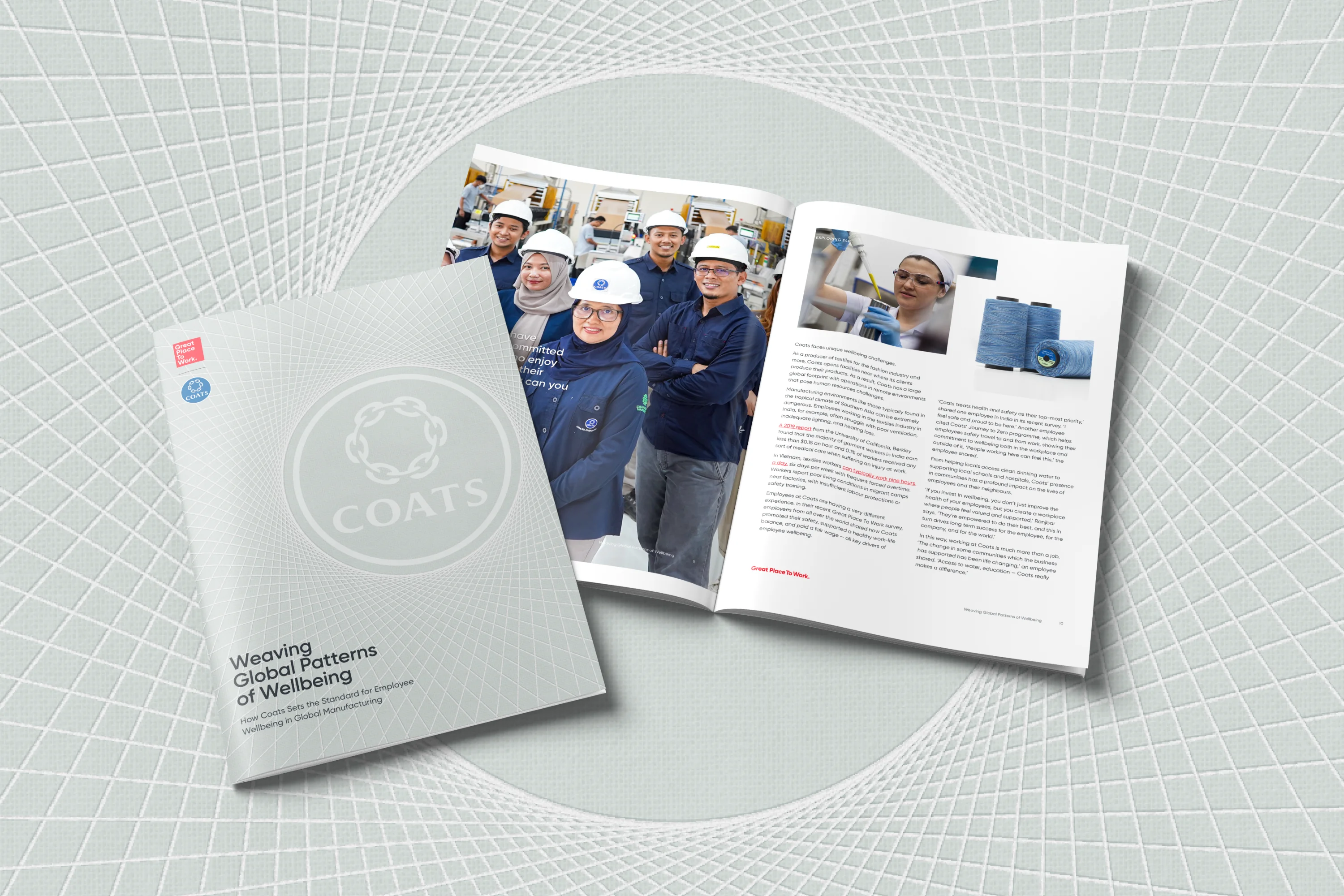
Report: How Coats Strengthens Wellbeing for Manufacturing Workers Across 55 Countries
New research from Great Place To Work explores the strategies used by Coats, a global manufacturing company, to foster well-being in challenging conditions.

Employee Well-Being Dips to Pre-Pandemic Levels; Black, Female, and Young Employees Suffer Most
Well-being in the U.S. has steadily declined since 2020, with certain groups disproportionately affected, according to new research in partnership Johns Hopkins University.

5 dimensions of employee well-being
By creating a climate of mental and emotional support, personal support, financial health and meaningful connections, business leaders can provide a foundation for positive well-being that allows employees to flourish.

How to promote employee well-being in the workplace
After researching the practices of Certified™ great workplaces and employee surveys, 6 key practices can help managers improve employee well-being.
Uncover the key to a thriving work environment
Related Articles

U.S Employee Well-Being Hits 5-Year Low: Young Workers and Individual Contributors Suffer Most

4 Strategies for Improving Resilience Across Your Workforce

Why the 4-Day Workweek Should Be Part of the AI Conversation
Want more advice on company culture?
Sign up to get the latest tips, insights and blogs from the global authority in company culture.